1. We concede that the climate is warming
2. We concede that CO2 levels are rising
3. But there is still not enough evidence that the changing climate is linked to anthropogenic (man-made) CO2 emissions.
4. Therefore, we should not hasten to reduce our CO2 emissions because the consequences of doing so are extreme and may not do anything to help climate change.
Many skeptics maintain this view despite the mountains of evidence that CO2 and climate are indeed linked and that humans are more than likely a major contributor to these effects. They say this despite their counter-arguments being disproved time after time. They say this despite the fact that the risks involved with climate change far exceed the sacrifices needed to change our behavior. They say this despite the fact that the planet is not something we ought to gamble with, regardless how right or wrong the science is.
Given that this debate is often as fruitful as debating a creationist on evolution, I propose a different tact in winning support for timely action on this issue: explain the looming problem of ocean acidification.
The problem:
CO2 emitted into the atmosphere is absorbed by the oceans. In fact, about a third of the CO2 we have emitted is now contained in the world's vast oceans. Once absorbed, CO2 then undergoes a chemical reaction to create carbonic acid. It's now been proven that the ocean's acidity level has slowly but surely been increasing from the CO2 humans have emitted. This has enormous consequences for the marine food web. Aquatic ecosystems are sustained by small organisms like coral, diatoms and pteropods:
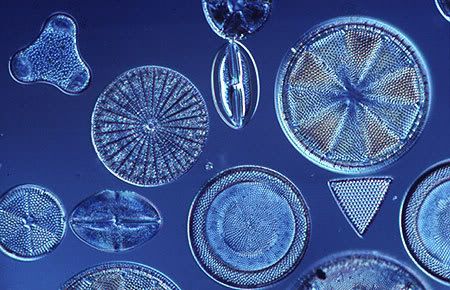
The survival of these organisms depends on their ability to create a protective carbonate shells. When the water's acidity increases, their shells simply dissolve and these organisms cannot survive.
Let me make one thing clear about this phenomenon: this acidification is occurring due to a very basic chemical reaction that is well understood and has been proven countless times in the laboratory. There is no uncertainty about the effects of CO2 on water's acidity. It is also well known that the affected organisms make up the base of the food chain in many ocean ecosystems. Thus if uncertainty in climate science creates a stumbling block when arguing skeptics, perhaps we can turn to an argument unrelated to climate -- an argument for which there is virtually no uncertainty that an unchecked rise in CO2 will have global consequences. If skeptics are unwilling to be convinced on the climate argument alone, perhaps they would be willing to recognize the economic, social, and political consequences of the collapse of global fisheries.

